🌾 Sprinkler Irrigation Project — Wadi Araba Development Company (North of Rahma, Aqaba)
Related: Naqqar Group • Products • Our Projects • Contact Us
Introduction
The Wadi Araba sprinkler irrigation project stands as one of Jordan’s key models for sustainable water management and agricultural modernization. Executed by Naqqar Group in partnership with the Wadi Araba Development Company, the project transformed the arid lands of North Rahma in Aqaba into productive agricultural zones supported by advanced irrigation systems.Central to this development was the construction of a 52,000 cubic meter storage pool, connected to an extensive network of main pipelines, branches, and sprinkler systems designed to distribute water efficiently across large agricultural areas.This initiative not only improved irrigation reliability and crop performance but also supported Jordan’s broader goal of enhancing agricultural sustainability in desert regions — demonstrating how innovation and engineering can overcome water scarcity challenges.External context: FAO: Irrigation & Water • Ministry of Water & Irrigation — Jordan • Jordan Valley Authority
1. Project Overview and Objectives
Located in the Araba Valley, the project aimed to convert dry, underutilized land into productive farmland through modern sprinkler irrigation systems. The main objectives included:- Establishing a centralized water storage facility capable of serving multiple irrigation zones.
- Designing and installing a pressurized sprinkler network optimized for uniform coverage.
- Reducing water losses through precise flow control and pressure regulation.
- Supporting local farmers and regional institutions with sustainable, easy-to-maintain systems.
2. Technical Design and System Components
The technical design of the Wadi Araba sprinkler irrigation project combined hydraulic precision, efficient material use, and long-term durability.Key components included:
- Water Pool (52,000 m³): Constructed using reinforced concrete and protective lining to minimize seepage and evaporation. The pool acts as a steady water reserve, ensuring consistent supply during dry periods.
- Pumping System: High-efficiency pumps equipped with variable-frequency drives (VFDs) were installed to manage flow rates and pressure dynamically, reducing energy consumption and extending pump lifespan.
- Main and Branch Pipelines: Built with High-Density Polyethylene (HDPE) pipes, known for corrosion resistance, flexibility, and strength — ensuring minimal maintenance over decades of operation. See: HDPE and irrigation components.
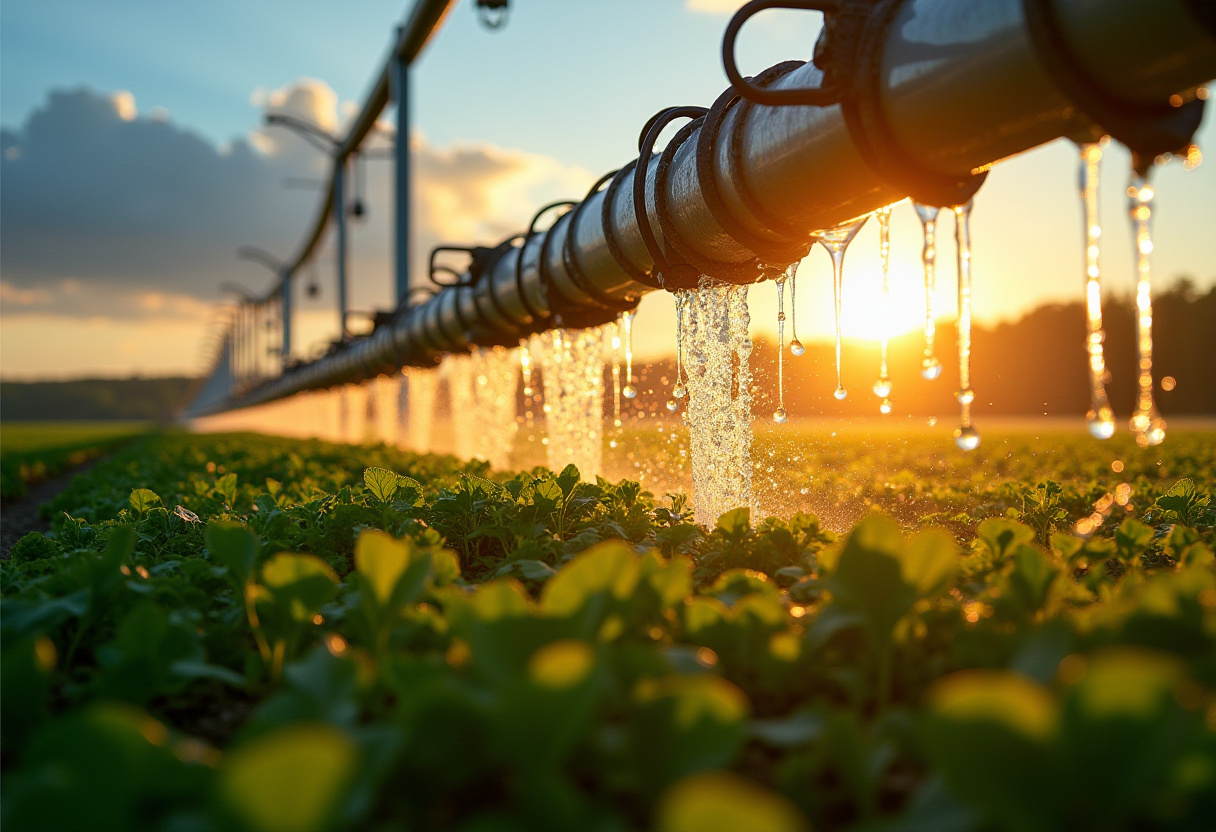
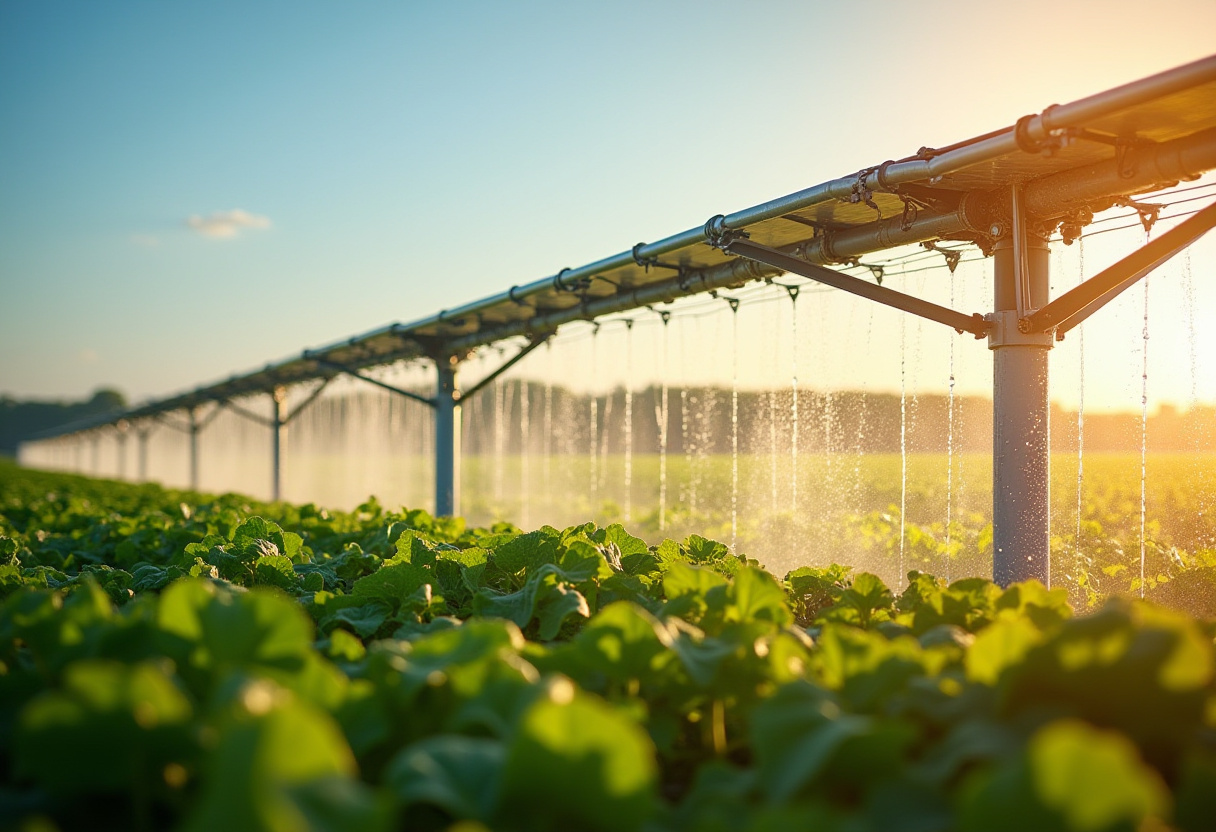
- Sprinkler Network: The system deployed rotary and impact sprinklers, calibrated for local wind and soil infiltration rates, achieving uniform water distribution.
- Filtration and Control Units: Multi-layer filtration systems were installed at key points, protecting sprinklers from clogging and maintaining stable pressure.
3. Implementation Timeline and Execution
The Wadi Araba project followed a phased execution plan developed by Naqqar Group’s engineering team.Phase 1 — Design and Planning: Detailed topographical surveys, soil testing, and water flow simulations were conducted to ensure system efficiency and durability.Phase 2 — Construction and Assembly: The 52,000 m³ pool was excavated and lined, followed by the installation of HDPE pipelines and pumping units.Phase 3 — Sprinkler Layout and Calibration: Sprinkler heads were positioned strategically across zones to guarantee equal coverage. Pressure tests were performed to confirm hydraulic balance.Phase 4 — Commissioning and Handover: Naqqar Group provided on-site training for operators and maintenance teams, ensuring long-term operational independence.This precise, structured implementation ensured that every component — from pipe fittings to control panels — functioned perfectly under real agricultural conditions.4. Results and Impact
Upon completion, the Wadi Araba sprinkler irrigation project delivered significant results for both local farmers and the region’s agricultural sector.- Water Efficiency: Reduced losses by up to 40%, ensuring that nearly all delivered water reached the crops.
- Productivity Boost: Farmers reported up to 30–50% increases in yield for irrigated crops compared to previous seasons.
- Operational Reliability: The system’s automation minimized manual work and human error.
- Sustainability: The project reduced dependence on groundwater sources, promoting better resource balance.
- Community Empowerment: Local workers participated in construction, gaining technical skills for future projects.
5. Maintenance and Long-Term Operation
The project was designed for low-maintenance operation. Routine checks include:- Cleaning filtration systems every 2–3 weeks.
- Conducting seasonal pressure inspections on mainlines.
- Verifying sprinkler nozzle performance after each planting cycle.
- Performing annual system flushing to remove sediment buildup.